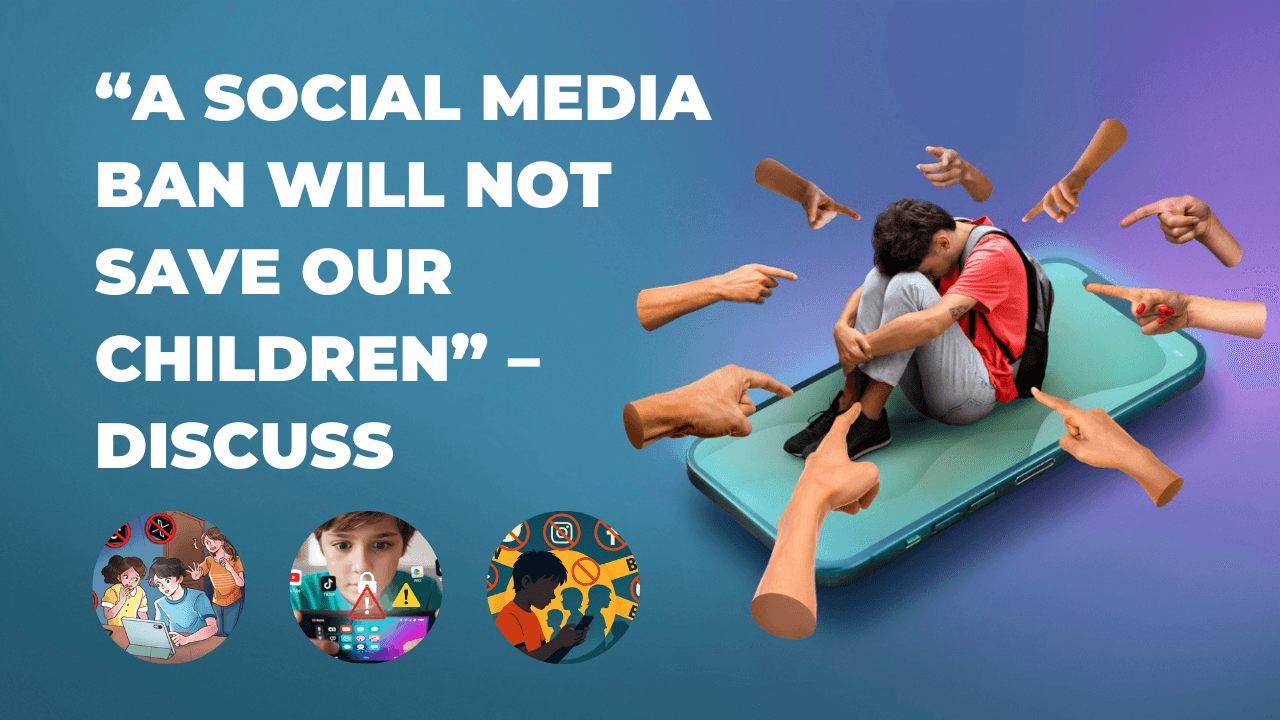
A social media banning is not a complete solution to protect children. Real change requires digital literacy, parental guidance, mental health support, and responsible platform regulation.
“A Social Media Ban Will Not Save Our Children” – Discuss
Introduction
Recent tragic incidents involving adolescents have reignited demands for banning social media for minors. While digital platforms can contribute to mental stress, addiction, and exposure to harmful content, a blanket ban is a simplistic solution to a complex social, psychological, and technological issue.
Why Social Media is Seen as a Threat
- Screen addiction affecting sleep, academics, and behaviour
- Exposure to cyberbullying, self-harm content, and misinformation
- Reduced family interaction and emotional isolation
- Dopamine-driven engagement models encouraging excessive use
Why Calls for Bans Arise
1. Psychological Concerns
- Excessive use linked with anxiety, depression, poor self-esteem, and body image issues
- Exposure to harmful content such as self-harm trends or cyberbullying
- Disrupted sleep and attention span
2. International Policy Trends
- Some countries have proposed or enacted stricter age restrictions and verification mechanisms
- Focus is on limiting early exposure to algorithm-driven platforms
3. Societal Anxiety
- Public reactions often reflect fear about rapid technological change
- Complex youth issues are attributed to a single visible factor — social media
Limitations and Risks of Blanket Bans
1. Practical Enforcement Issues
- Age restrictions can be bypassed through technical workarounds
- Young users may shift to less regulated or unsafe digital spaces
2. Impact on Adolescent Development
- Online platforms support peer interaction, identity exploration, and learning
- Marginalized youth may rely on online spaces for support networks
3. Exclusion from Decision-Making
- Young people are rarely consulted in policies directly affecting them
- Leads to regulations that do not reflect real usage patterns
4. Social Inequality Concerns
- Restrictions may disproportionately limit girls and disadvantaged groups in restrictive social settings
- Could widen the digital divide
Need for Alternative Policy Approaches
1. Platform Accountability
- Stronger rules on algorithm design and content moderation
- Age-appropriate design standards
2. Legal and Regulatory Framework
- Laws ensuring child safety online
- Independent oversight mechanisms
3. Research and Youth Participation
- Evidence-based policymaking
- Involving adolescents in shaping digital policies
4. Beyond Social Media
- Emerging technologies like AI also influence children’s cognition and safety
- Regulation must address the broader digital ecosystem
Broader Perspective
- Focus should be on creating a balanced digital environment, not just restricting access
- Family guidance, digital literacy, and mental health support are essential
- Regulation should be consistent across platforms and technologies
Conclusion
Although digital platforms present genuine risks, prohibiting access alone cannot resolve deeper social, psychological, and structural challenges. A balanced strategy combining regulation, education, youth participation, and supportive ecosystems offers a more sustainable path than blanket bans.