Government Scheme for Child Digital Safety : “Explore the latest 2026 government initiatives on child digital protection in India. From the Raksha AI shield to NEP 2020’s PRAGYATA guidelines, learn how the Ministry of Education is tackling student stress and screen time for a safer digital childhood.”
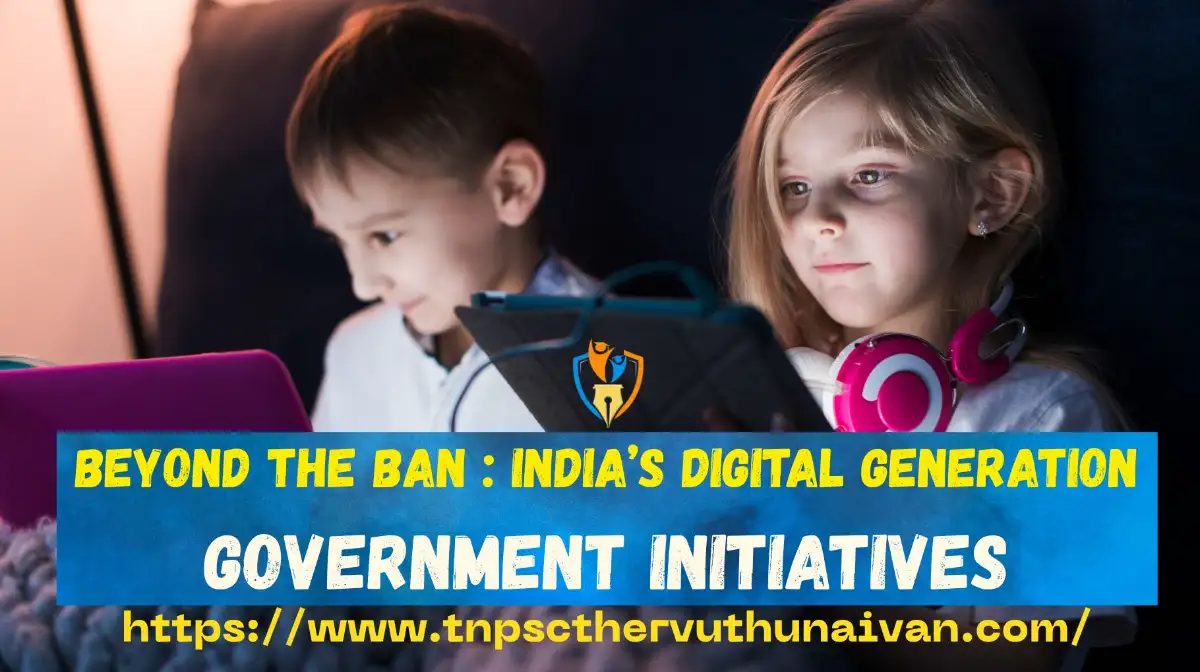
Beyond Bans: India’s “Guided Approach” to the Digital Generation
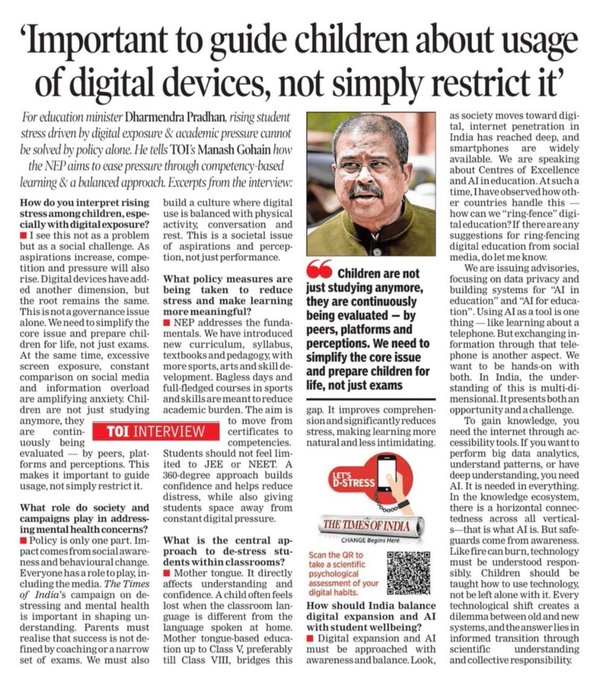
In a landscape where digital screens are as ubiquitous as textbooks, India is pivoting away from a culture of restriction toward one of informed empowerment. Education Minister Dharmendra Pradhan, in a recent dialogue with The Times of India, underscored a critical shift: the goal is no longer just to “limit” device usage, but to guide children through the digital maze with a sense of balance and responsibility.
The Problem: Beyond the Screen
For the Ministry of Education, rising student stress isn’t just a byproduct of “too much internet.” It is viewed as a complex social challenge driven by:
- Constant Evaluation: Children today are being judged by peers and social platforms in real-time.
- Aspiration Pressure: The “fear of missing out” (FOMO) and digital comparison amplify academic anxiety.
- Information Overload: Continuous exposure to uncurated content can lead to mental fatigue.
Government Scheme for Child Digital Safety
To combat these challenges, the Indian government has rolled out a comprehensive framework that integrates policy, curriculum, and technology.
1. The PRAGYATA Guidelines
The Ministry of Education has implemented the PRAGYATA (Planning, Reviewing, Arranging, Guiding, Yak (Talk), Assigning, Tracking, and Appreciating) roadmap. It sets specific caps on screen time to prevent digital burnout:
- Pre-primary: Maximum 30 minutes (for parent-child interaction).
- Classes 1–8: Two sessions of 30–45 minutes each.
- Classes 9–12: Up to four sessions of 30–45 minutes each.
2. NEP 2020: Focus on “Competency over Certificates”
The National Education Policy (NEP) 2020 aims to reduce student stress by simplifying the curriculum. By introducing “Bagless Days” and prioritizing sports and arts, the government is creating a “360-degree approach” to build confidence and give students space away from constant digital pressure.
3. AI for Education & “Raksha”
Rather than viewing Artificial Intelligence as a threat, the government is adopting a “Safe by Design” philosophy.
- AI Curriculum: A new curriculum for Classes III–VIII teaches students Computational Thinking—empowering them to understand how algorithms work rather than just consuming them.
- Raksha AI: Recently, the government unveiled “Raksha,” an AI-powered child protection solution designed to identify and prevent digital harm before it reaches the child.
4. Legislative Guardrails: DPDP Act 2023
The Digital Personal Data Protection (DPDP) Act provides a legal backbone. It mandates “verifiable parental consent” before any platform processes a child’s data and strictly prohibits tracking or targeted advertising directed at minors.
Key Legal Safeguards at a Glance : Government Scheme for Child Digital Safety
| Provision | Law/Act | Action Taken |
| Content Removal | IT Act, 2000 | Platforms must remove harmful content within 3 hours of notification. |
| Age Verification | DPDP Rules 2025 | Use of “virtual tokens” and identity checks to ensure users are of age. |
| Sexual Offenses | POCSO Act | Specifically criminalizes the possession or transmission of CSAM (Child Sexual Abuse Material). |
| Labelling | MeitY 2026 Mandate | Mandatory labelling of all synthetically generated (AI) content to prevent deepfakes. |
The Road Ahead: “The Mother Tongue Bridge”
Minister Pradhan highlighted that de-stressing also happens through inclusion. By promoting education in the mother tongue (up to Class VIII), the government aims to ensure children feel comfortable and confident in their learning environment, reducing the “alienation” that often drives students to seek refuge in digital distractions.
As society moves deeper into the digital age, the message from the Ministry is clear: Technology is like fire—it can burn, or it can light the way. The answer lies not in fear, but in collective responsibility and scientific understanding.