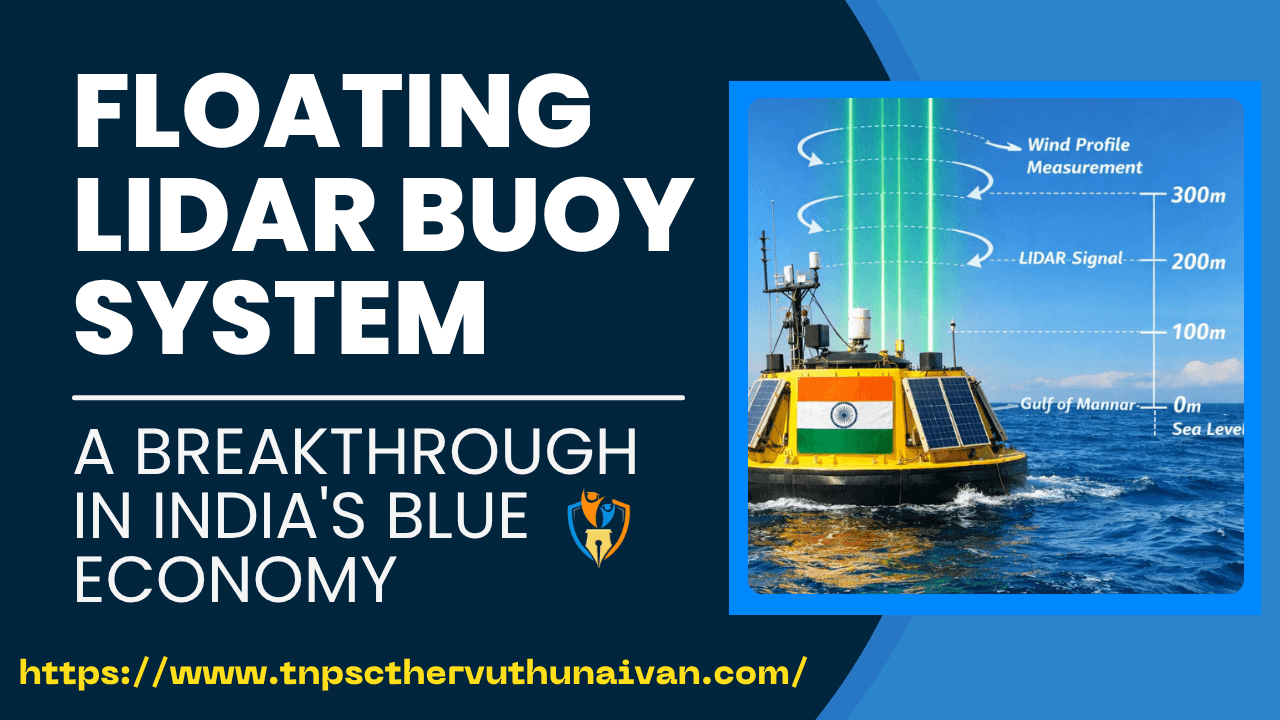
In a major boost to India’s renewable energy and disaster management goals, the National Institute of Ocean Technology (NIOT) has successfully tested an indigenous Floating LiDAR Buoy System.
மிதக்கும் LiDAR மிதவை அமைப்பு (Floating LiDAR Buoy System)
இந்தியாவின் கடல்சார் ஆய்வில் ஒரு முக்கிய மைல்கல்லாக, தேசிய கடல்சார் தொழில்நுட்ப நிறுவனம் (NIOT) உள்நாட்டிலேயே தயாரிக்கப்பட்ட மிதக்கும் லிடார் மிதவை அமைப்பை வெற்றிகரமாகச் சோதித்துள்ளது.
முக்கிய குறிப்புகள்
1. அறிமுகம்:
- இது கடல் பரப்பில் காற்றின் வேகம் மற்றும் திசையைத் துல்லியமாக அளவிடப் பயன்படும் ஒரு நவீன கருவியாகும்.
- உருவாக்கியவர்: தேசிய கடல்சார் தொழில்நுட்ப நிறுவனம் (NIOT), சென்னை (புவி அறிவியல் அமைச்சகத்தின் கீழ் உள்ள ஒரு தன்னாட்சி அமைப்பு).
- சமீபத்திய நிகழ்வு: கன்னியாகுமரி மாவட்டம், முட்டம் கடற்கரைப் பகுதியில் இது வெற்றிகரமாகச் சோதிக்கப்பட்டது.
2. செயல்பாட்டு முறை:
- இது ஒளி உணர்திறன் (Optical Remote Sensing) மற்றும் டாப்ளர் விளைவு (Doppler Shift) ஆகிய கொள்கைகளின் அடிப்படையில் செயல்படுகிறது.
- இந்த மிதவை வளிமண்டலத்தில் லேசர் கதிர்களைச் செலுத்தும். அவை காற்றில் உள்ள துகள்கள் மீது பட்டுத் திரும்புவதை வைத்து காற்றின் வேகம் கணக்கிடப்படுகிறது.
3. சிறப்பம்சங்கள்:
- கடல் மட்டத்திலிருந்து 300 மீட்டர் உயரம் வரை காற்றின் தரவுகளைச் சேகரிக்க முடியும்.
- புயல் மற்றும் சூறாவளிகளைக் துல்லியமாகக் கண்காணிக்கவும், அவற்றின் தீவிரத்தைக் கணிக்கவும் உதவுகிறது.
- செயற்கைக்கோள் வழியாகத் தரவுகளைத் தரைக்கட்டுப்பாட்டு மையங்களுக்கு உடனுக்குடன் (Real-time) அனுப்பும் திறன் கொண்டது.
4. முக்கியத்துவம்:
- புதுப்பிக்கத்தக்க எரிசக்தி: கடலோரக் காற்றாலை மின்சாரம் (Offshore Wind Energy) எடுப்பதற்குச் சிறந்த இடங்களைக் கண்டறிய உதவுகிறது.
- நீலப் பொருளாதாரம் (Blue Economy): இந்தியாவின் கடல்சார் பொருளாதாரத் திட்டங்களுக்குத் தேவையான முக்கியமான தரவுகளை வழங்குகிறது.
- தற்சார்பு இந்தியா: வெளிநாட்டுத் தொழில்நுட்பங்களைச் சார்ந்திருப்பதை இது குறைக்கிறது.
5. பாகங்கள் மற்றும் செயல்பாடுகள்
முக்கிய பாகங்கள் மற்றும் அவற்றின் பணிகள்:
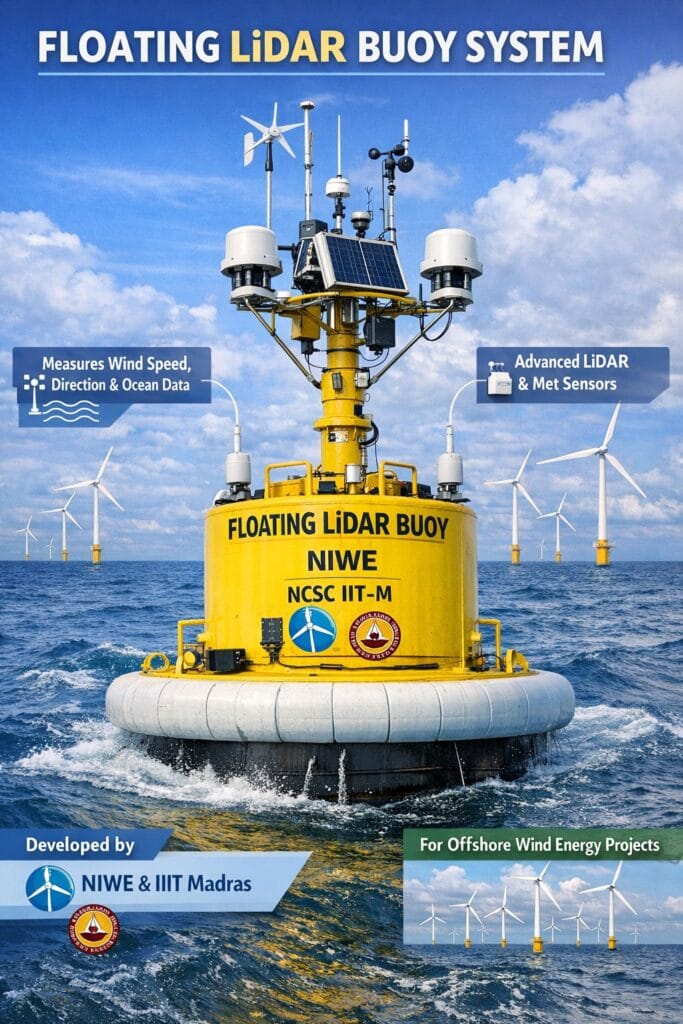
- லிடார் சென்சார் (LiDAR Sensor): இது அமைப்பின் இதயம் போன்றது. இது லேசர் கதிர்களை வளிமண்டலத்திற்கு அனுப்பி, காற்றில் உள்ள துகள்கள் மூலம் பிரதிபலிக்கப்படும் ஒளியை (Backscattering) பகுப்பாய்வு செய்து காற்றின் வேகத்தைக் கணக்கிடுகிறது.
- மிதவை மேடை (Buoy Hull): இது கடலில் நிலையாக மிதக்க உதவும் ஒரு உறுதியான தளம். அலையினால் ஏற்படும் அதிகப்படியான அசைவுகளைக் கட்டுப்படுத்தி, துல்லியமான அளவீடுகளை எடுக்க இது உதவுகிறது.
- மின்சக்தி அமைப்பு (Power System): கடலின் நடுவே மின்சாரம் கிடைக்காது என்பதால், இதில் சூரிய ஒளித் தகடுகள் (Solar Panels) மற்றும் சிறிய காற்றாலைகள் (Micro Wind Turbines) பொருத்தப்பட்டுள்ளன. இவை மின்கலன்களை (Batteries) சார்ஜ் செய்து கருவி தொடர்ந்து இயங்க உதவுகின்றன.
- தகவல் தொடர்பு அமைப்பு (Communication System): சேகரிக்கப்பட்ட தரவுகளைச் செயற்கைக்கோள் (Satellite) அல்லது செல்லுலார் நெட்வொர்க் மூலம் கரைக்கு அனுப்பும் டிரான்ஸ்மிட்டர்கள் இதில் உள்ளன.
- வானிலை மற்றும் கடல்சார் சென்சார்கள் (Metocean Sensors): காற்றின் வேகம் தவிர, கடல் அலைகளின் உயரம், நீரோட்டத்தின் வேகம், நீரின் வெப்பநிலை மற்றும் வளிமண்டல அழுத்தம் ஆகியவற்றை இவை அளவிடுகின்றன.
முக்கிய செயல்பாடுகள்:
- செங்குத்து அளவீடு: கடல் மட்டத்திலிருந்து 10 மீட்டர் முதல் 300 மீட்டர் உயரம் வரை பல நிலைகளில் காற்றின் வேகத்தை அளவிட முடியும்.
- துல்லியமான கணிப்பு: டாப்ளர் விளைவைப் பயன்படுத்தி, புயல் வீசும் திசையை முன்கூட்டியே கணிக்க உதவுகிறது.
Read More Articles – CLICK HERE
1. What is a Floating LiDAR Buoy System ?
The Floating LiDAR (Light Detection and Ranging) Buoy is a sophisticated oceanic platform designed to provide high-resolution wind profiles and meteorological data directly from the sea surface.
- Developed By: NIOT (National Institute of Ocean Technology), Chennai, an autonomous body under the Ministry of Earth Sciences, Govt. of India.
- Location of Test: Off the coast of Muttom, Tamil Nadu.
2. Scientific Principle
- The system operates on Optical Remote Sensing.
- It emits infrared laser pulses into the atmosphere. These pulses hit aerosols, dust, and water droplets (Backscattering).
- By measuring the Doppler Shift (change in frequency) of the reflected light, the system calculates wind speed and direction at various altitudes simultaneously.
3. Functions and Features
- Vertical Profiling: Unlike traditional anemometers, it can capture wind data up to 300 metres above sea level.
- Real-time Monitoring: It tracks wind speed, direction, turbulence, and atmospheric pressure.
- Data Transmission: Equipped with satellite and cellular telemetry to transmit live data to shore-based stations.
4. Significance
- Offshore Wind Energy: Crucial for identifying optimal locations for offshore wind farms, supporting India’s 2030 renewable energy targets.
- Disaster Management: Provides accurate data for predicting the intensity and landfall of cyclones and storms.
- Self-Reliance (Atmanirbhar Bharat): Reduces dependence on expensive imported buoy technologies and foreign marine survey consultancies.
- Climate Science: Helps scientists understand ocean-atmosphere interactions, critical for climate modeling.
Key Components and Their Functions:
- LiDAR Unit (The Core): It uses laser-based technology to scan the atmosphere. By emitting infrared light and measuring the Doppler Shift from particles in the air, it calculates wind speed and direction at various altitudes.
- The Floating Platform (Buoy Hull): Designed for high stability, the hull ensures the buoy remains upright even in rough seas. It often includes a “mooring system” (anchors) to keep it in a fixed geographical location.
- Autonomous Power Supply: Since it operates far from the coast, it relies on renewable energy.
- Solar Panels: To capture solar energy.
- Micro Wind Turbines: To generate power from wind.
- Battery Banks: To ensure 24/7 operation during cloudy or calm days.
- Telemetry and Communication Unit: This system transmits real-time data to shore-based research stations via Satellite links (like Iridium) or GSM/4G networks.
- Inertial Measurement Unit (IMU): This is critical for floating systems. It measures the buoy’s pitch, roll, and heave (movement caused by waves) and subtracts this motion from the wind data to ensure 100% accuracy.
- Additional Metocean Sensors: These measure secondary data such as wave height, current speed, humidity, and sea surface temperature.
Primary Functions:
- Resource Mapping: Identifying high-wind areas suitable for setting up multi-billion dollar offshore wind farms.
- Weather Intelligence: Providing live feeds for cyclone intensity and landfall predictions.
- Climate Research: Monitoring long-term changes in ocean-atmosphere interactions.