Chief Election Commissioner (CEC) | தலைமைத் தேர்தல் ஆணையர் – நியமனம், அதிகாரங்கள் மற்றும் நீக்கல் நடைமுறை
அறிமுகம்
இந்தியத் தேர்தல் ஆணையம் (ECI) என்பது இந்திய அரசியல் சாசனத்தின் பிரிவு 324-ன் கீழ் உருவாக்கப்பட்ட ஒரு தன்னாட்சி பெற்ற மற்றும் நிரந்தரமான அமைப்பாகும். நாட்டின் சுதந்திரமான மற்றும் நியாயமான தேர்தல்களை உறுதி செய்வது இதன் முக்கிய நோக்கமாகும்.
அரசியல் சட்ட அடிப்படை
Article 324 – முக்கிய அம்சங்கள்
- Article 324 of the Constitution of India தேர்தல்களின் மேற்பார்வை, வழிநடத்தல் மற்றும் கட்டுப்பாடு அனைத்தையும் தேர்தல் ஆணையத்திற்கு வழங்குகிறது.
- தேர்தல் ஆணையம் அமைப்பு:
- தலைமைத் தேர்தல் ஆணையர் (CEC)
- மற்ற தேர்தல் ஆணையர்கள்
- இந்த அமைப்பு சுயாதீனமாக செயல்பட பாதுகாப்புகள் வழங்கப்பட்டுள்ளது.
தலைமைத் தேர்தல் ஆணையர் நியமனம்
அரசியல் சட்ட பிரிவு
- Article 324(2) of the Constitution of India படி:
- இந்திய குடியரசுத் தலைவர் (President of India) CEC-ஐ நியமிக்கிறார்.
நியமனம் செய்யும் முறை (2023 புதிய சட்டத்தின்படி)
2023-ஆம் ஆண்டின் “தலைமைத் தேர்தல் ஆணையர் மற்றும் பிற தேர்தல் ஆணையர்கள் (நியமனம், சேவை நிபந்தனைகள் மற்றும் பதவிக்காலம்) சட்டத்தின்” படி, நியமன செயல்முறை பின்வருமாறு மாற்றப்பட்டுள்ளது:
- தேடுதல் குழு (Search Committee): மத்திய சட்ட அமைச்சரின் தலைமையில் ஐந்து தகுதியான நபர்களைக் கொண்ட ஒரு பட்டியலைத் தயாரிக்கும்.
- தேர்வுக் குழு (Selection Committee): இக்குழுவில் பிரதமர் (தலைவர்), ஒரு மத்திய அமைச்சரவை அமைச்சர் மற்றும் மக்களவை எதிர்க்கட்சித் தலைவர் (அல்லது பெரிய எதிர்க்கட்சியின் தலைவர்) ஆகியோர் இருப்பார்கள்.
- குடியரசுத் தலைவர் நியமனம்: தேர்வுக் குழுவின் பரிந்துரையின் அடிப்படையில், இந்தியக் குடியரசுத் தலைவர் தலைமைத் தேர்தல் ஆணையரை முறைப்படி நியமிப்பார்.
- பதவிக்காலம் மற்றும் வயது வரம்பு: தலைமைத் தேர்தல் ஆணையர் 6 ஆண்டுகள் அல்லது 65 வயது வரை (எது முதலில் வருகிறதோ அதுவரை) பதவியில் இருப்பார்.
தலைமைத் தேர்தல் ஆணையரின் அதிகாரங்கள்
தலைமைத் தேர்தல் ஆணையர் ஆணையத்தின் தலைவராக இருந்து பின்வரும் பணிகளை மேற்கொள்கிறார்:
- தேர்தல் மேலாண்மை: நாடாளுமன்றம் (மக்களவை & மாநிலங்களவை), மாநில சட்டமன்றங்கள், குடியரசுத் தலைவர் மற்றும் குடியரசுத் துணைத் தலைவர் தேர்தல்களை நடத்துதல்.
- ஒழுங்குமுறை அதிகாரங்கள்:
- Model Code of Conduct (MCC) அமல்படுத்துதல்
- தேர்தல் அதிகாரிகளை கட்டுப்படுத்துதல்
- வாக்காளர் பட்டியலைத் தயாரித்தல் மற்றும்
- அவ்வப்போது திருத்தம் செய்து தகுதியுள்ள புதிய வாக்காளர்களைப் பதிவு செய்தல்.
- தேர்தல் அட்டவணை: தேர்தலுக்கான தேதிகள் மற்றும் கால அட்டவணையை அறிவித்தல்.
- நீதித்துறையை ஒத்த அதிகாரங்கள் (Quasi-Judicial Powers):
- கட்சிகள் தொடர்பான பிரச்சினைகள் தீர்ப்பு
- தேர்தல் சின்னங்கள் ஒதுக்கீடு
- தகுதி நீக்கம் குறித்து ஆலோசனை
- சின்னங்கள் ஒதுக்கீடு: அரசியல் கட்சிகளுக்கு அங்கீகாரம் வழங்குதல் மற்றும் தேர்தல் சின்னங்களை ஒதுக்குதல் தொடர்பான சர்ச்சைகளைத் தீர்த்தல்.
- ஆலோசனை அதிகாரங்கள் :
- Articles 103 and 192 of the Constitution of India படி ஜனாதிபதி / ஆளுநருக்கு ஆலோசனை வழங்குதல்
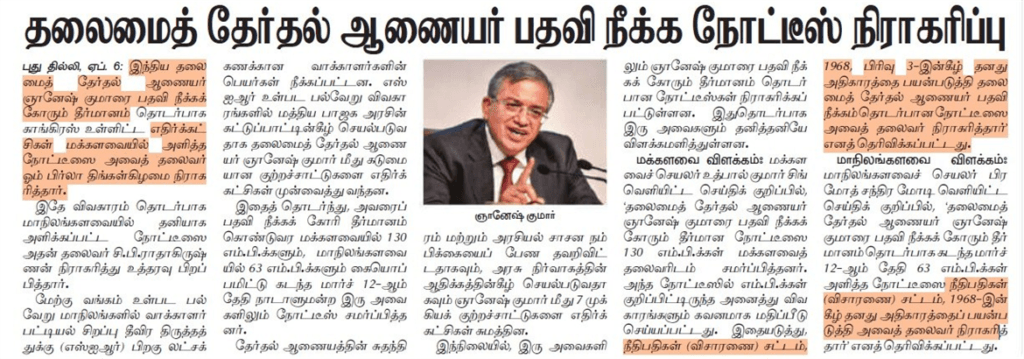
தலைமைத் தேர்தல் ஆணையரை நீக்கும் நடைமுறை
தலைமைத் தேர்தல் ஆணையருக்கு அரசியல் சாசனம் (Article 324(5) of the Constitution of India) அதிகப்படியான பாதுகாப்பு வழங்குகிறது:
- உச்ச நீதிமன்ற நீதிபதிக்கு இணையான முறை: தலைமைத் தேர்தல் ஆணையரை, ஒரு உச்ச நீதிமன்ற நீதிபதியை நீக்கும் அதே கடுமையான முறையைப் பின்பற்றி மட்டுமே நீக்க முடியும்.
- காரணங்கள்: “நிரூபிக்கப்பட்ட தவறான நடத்தை” (Proved misbehaviour) அல்லது “திறனின்மை/இயலாமை” (Incapacity) ஆகிய காரணங்களுக்காக மட்டுமே நீக்க முடியும்.
- நாடாளுமன்றத் தீர்மானம்: நாடாளுமன்றத்தின் இரு அவைகளிலும் (மக்களவை மற்றும் மாநிலங்களவை) சிறப்புப் பெரும்பான்மையுடன் (அவையின் மொத்த உறுப்பினர்களில் பெரும்பான்மை மற்றும் வருகை தந்து வாக்களித்தவர்களில் 2/3 பங்கு ஆதரவு) தீர்மானம் நிறைவேற்றப்பட வேண்டும்.
- சுதந்திரம்: இவரைப் பதவி நீக்கம் செய்ய குடியரசுத் தலைவருக்குத் தனிப்பட்ட அதிகாரம் கிடையாது; நாடாளுமன்றத்தின் ஒப்புதல் கட்டாயம்.
- முக்கிய அம்சம் :
- Removal of Supreme Court Judge போலவே நீக்கல் நடைமுறை
- இது பதவியின் சுயாதீனத்தை உறுதி செய்கிறது
தலைமைத் தேர்தல் ஆணையர் பதவி, இந்திய ஜனநாயகத்தின் முக்கிய தூணாகும். அதன் நியமனம், அதிகாரங்கள் மற்றும் நீக்கல் நடைமுறை அனைத்தும் அதன் சுயாதீனத்தையும் நம்பகத்தன்மையையும் உறுதி செய்யும் வகையில் வடிவமைக்கப்பட்டுள்ளன.
Prelims Exam Point of View
- Article: 324
- Appointing Authority: President
- Tenure: 6 years / 65 வயது
- Removal: Supreme Court நீதிபதி போல
Chief Election Commissioner: Appointment, Powers, and Removal Process
1. Introduction
The Election Commission of India (ECI) is an autonomous and permanent constitutional body established under Article 324 of the Indian Constitution. Its primary objective is to ensure the conduct of free and fair elections in the country.
2. Appointment Process (As per the 2023 Act)
Under the “Chief Election Commissioner and Other Election Commissioners (Appointment, Conditions of Service and Term of Office) Act, 2023”, the process is as follows:
- Search Committee: Led by the Union Law Minister, it prepares a panel of five potential candidates.
- Selection Committee: Comprises the Prime Minister (Chairperson), a Union Cabinet Minister, and the Leader of the Opposition (or the leader of the largest opposition party) in the Lok Sabha.
- Presidential Appointment: Based on the recommendation of the Selection Committee, the President of India formally appoints the CEC.
- Tenure: The CEC holds office for a term of 6 years or until they attain the age of 65 years, whichever is earlier.
3. Powers and Functions
As the head of the Commission, the CEC exercises the following powers:
- Election Management: Conducting elections to the Parliament (LS & RS), State Legislatures, and the offices of the President and Vice-President.
- Electoral Rolls: Preparation and periodic revision of electoral rolls to register all eligible voters.
- Election Schedule: Announcing the dates and schedules for elections.
- Model Code of Conduct (MCC): Enforcing the code of conduct for political parties and candidates during elections and taking action against violations.
- Symbol Allocation: Granting recognition to political parties and resolving disputes regarding the allotment of symbols.
4. Removal Process
The Constitution provides the CEC with security of tenure to maintain independence:
- Similarity to SC Judge: The CEC can be removed from office only in a manner similar to a Judge of the Supreme Court.
- Grounds for Removal: Only on the grounds of “Proved misbehaviour” or “Incapacity.”
- Parliamentary Motion: A resolution must be passed by both Houses of Parliament (Lok Sabha and Rajya Sabha) with a Special Majority (a majority of the total membership of the House and 2/3rds of the members present and voting).
- Independence: The President cannot remove the CEC unilaterally; the recommendation/resolution of the Parliament is mandatory.