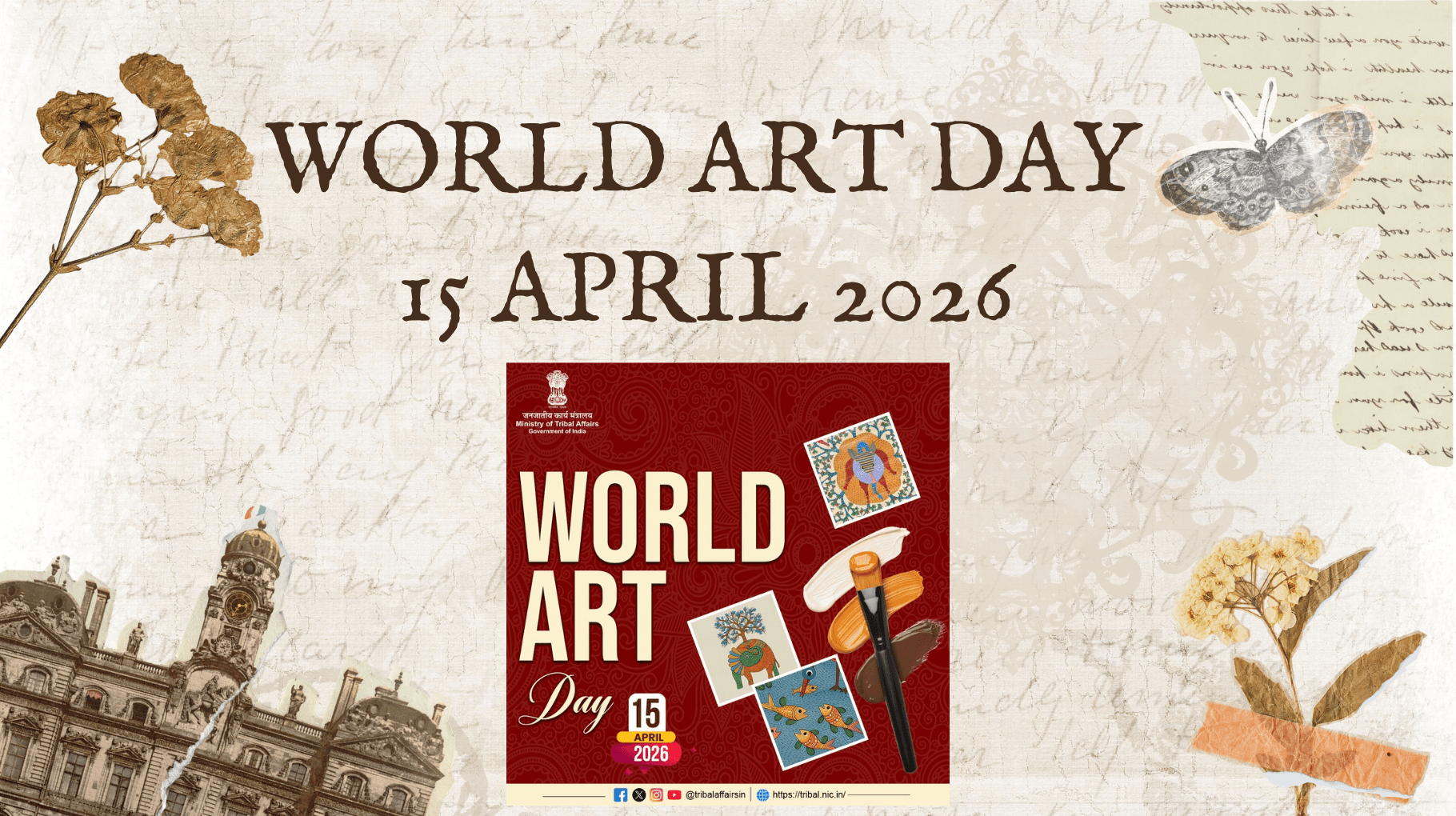
World Art Day 2026: A Garden of Expression Rooted in India’s Tribal Heritage
World Art Day 2026 : A Garden of Expression Rooted in India’s Tribal Heritage
Every year on April 15, the world pauses to celebrate the birth of Leonardo da Vinci and the universal power of creativity. In 2026, the global theme for World Art Day is “A Garden of Expression: Cultivating Community Through Art.” While da Vinci’s masterpieces represent the pinnacle of the Renaissance, here in India, this day offers a perfect opportunity to look toward our own “living archives”—the rich, diverse, and resilient expressions of our tribal heritage.
From the walls of rural mud huts to the high-fashion runways of the world, India’s indigenous art is no longer a silent tradition; it is a loud and vibrant force driving our creative economy and cultural identity.
The Living Canvas : More Than Just Patterns
For India’s tribal communities, art is not a hobby—it is a language. It is how history is recorded, rituals are performed, and the relationship between humans and nature is negotiated.
1. Geometric Stories: Warli and Saura
In the Sahyadri range of Maharashtra, the Warli tribe uses basic shapes—circles, triangles, and squares—to depict the rhythms of life. A circle represents the sun or moon, while a triangle represents mountains and trees. Similarly, the Saura art of Odisha uses elongated geometric figures to create italons (icons) dedicated to their deities, documenting village life and rituals.
2. The Dotted Landscapes of Gond and Bhil
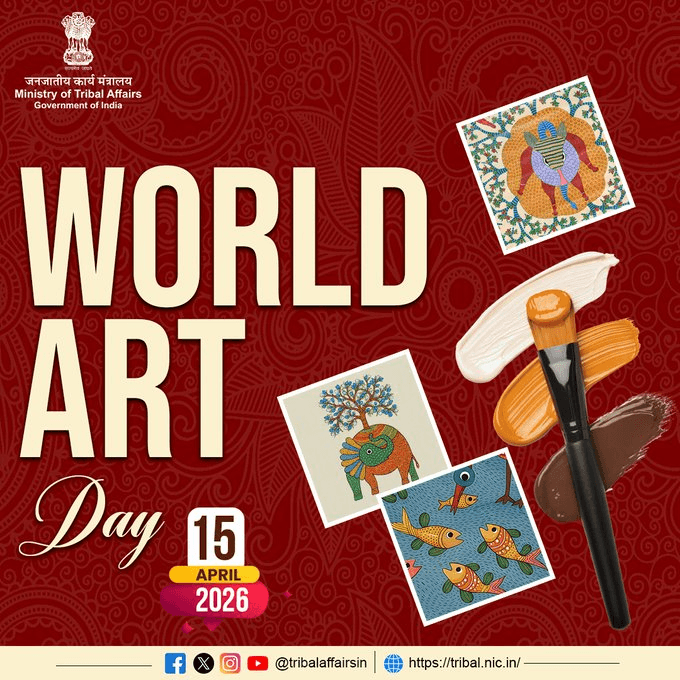
Gond art from Madhya Pradesh is famous for its intricate use of dots and lines that create a sense of movement. It’s a rhythmic style that often features the “Tree of Life” and mythological spirits. On the other hand, Bhil art uses large, uneven dots, with each artist having a unique “signature” dot pattern, turning myths and legends into powerful visual stories.
3. Sacred Murals: Sohrai and Khovar
In Jharkhand, the harvest season brings the vibrant Sohrai murals to the walls of homes, celebrating cattle and agricultural prosperity. During the wedding season, Khovar art takes over, where layers of colored earth are scraped away using a comb-cut technique to reveal matrimonial symbols of fertility and nature.
Sustainable Craftsmanship: The Art of Earth and Fire
Tribal art extends beyond the two-dimensional. The heritage is equally preserved through sustainable crafts that have remained unchanged for generations.
- Dhokra Metal Art: Using the ancient “lost-wax” casting technique, tribes in Chhattisgarh and Odisha create non-ferrous metal figurines that are globally coveted.
- Bamboo and Wood Carving: From the intricate Naga art of the Northeast to the bamboo crafts of Middle India, these traditions reflect a profound respect for forest resources.
- Sustainability as a Standard: Long before “eco-friendly” was a buzzword, tribal artists were using natural pigments from stones, flowers, and clay, and materials like bamboo and scrap metal.
World Art Day 2026 : A Milestone Year for Tribal Empowerment
This year’s World Art Day celebrations in India are particularly significant following the Tribes Art Fest (TAF) 2026. Organized by the Ministry of Tribal Affairs, this national initiative brought together over 75 artists and 1,000 artworks under one roof in New Delhi.
These efforts are not just about preservation; they are about economic empowerment. With the launch of brands like “RISA” and the expansion of market linkages through TRIFED, tribal fashion and crafts are being positioned in premium global markets. This aligns with the vision of Viksit Bharat @ 2047, where indigenous knowledge is a pillar of national progress.
Conclusion: Cultivating Our Community
The 2026 theme, A Garden of Expression, reminds us that art is a unifying force. When we support a Gond painter or a Dhokra artisan, we aren’t just buying a product; we are participating in a dialogue that has lasted for millennia.
This World Art Day, let’s look beyond the galleries and into the heart of India’s tribal heritage. These art forms are living, breathing evidence of our resilience and our deep-rooted connection to the earth.
Call to Action: Celebrate World Art Day by exploring tribal art at a local craft fair or through the official TRIFED portal. Share your favorite indigenous art form today using #WorldArtDay and #NariShakti to honor the women artists who keep these traditions alive!
FAQ: Exploring Tribal Art Traditions
What is the significance of World Art Day 2026?
World Art Day 2026, themed “A Garden of Expression,” celebrates the role of art in building communities and fostering global unity, coinciding with Leonardo da Vinci’s birthday.
How does tribal art contribute to sustainability?
Most tribal art forms use organic materials, such as natural earth pigments, vegetable dyes, and sustainable fibers like bamboo, making them inherently eco-friendly.
Which Indian tribal art forms have GI tags?
Several art forms like Warli (2014), Gond (2023), Pithora (2021), and Saura (2024) have received Geographical Indication (GI) tags, protecting their unique cultural identity.
How can students and beginners learn tribal art?
Many government initiatives like the Tribes Art Fest offer mentorship workshops. You can also find certified courses through Eklavya Model Residential Schools or local cultural centers.
What is the “Tree of Life” in Gond painting?
The “Tree of Life” is a central motif in Gond art representing the interconnectedness of all living beings—animals, birds, and humans—within the natural world.
World Art Day: Tribal Art Traditions
This video provides a look at the Tribes Art Fest 2026, showcasing how India’s rich tribal heritage is being celebrated and promoted on a national stage.