ISRO ISSAR 2025 அறிக்கை: விண்வெளிக் கழிவுகளும் இந்தியாவிற்கு விடுக்கப்பட்ட எச்சரிக்கையும்!
The Context
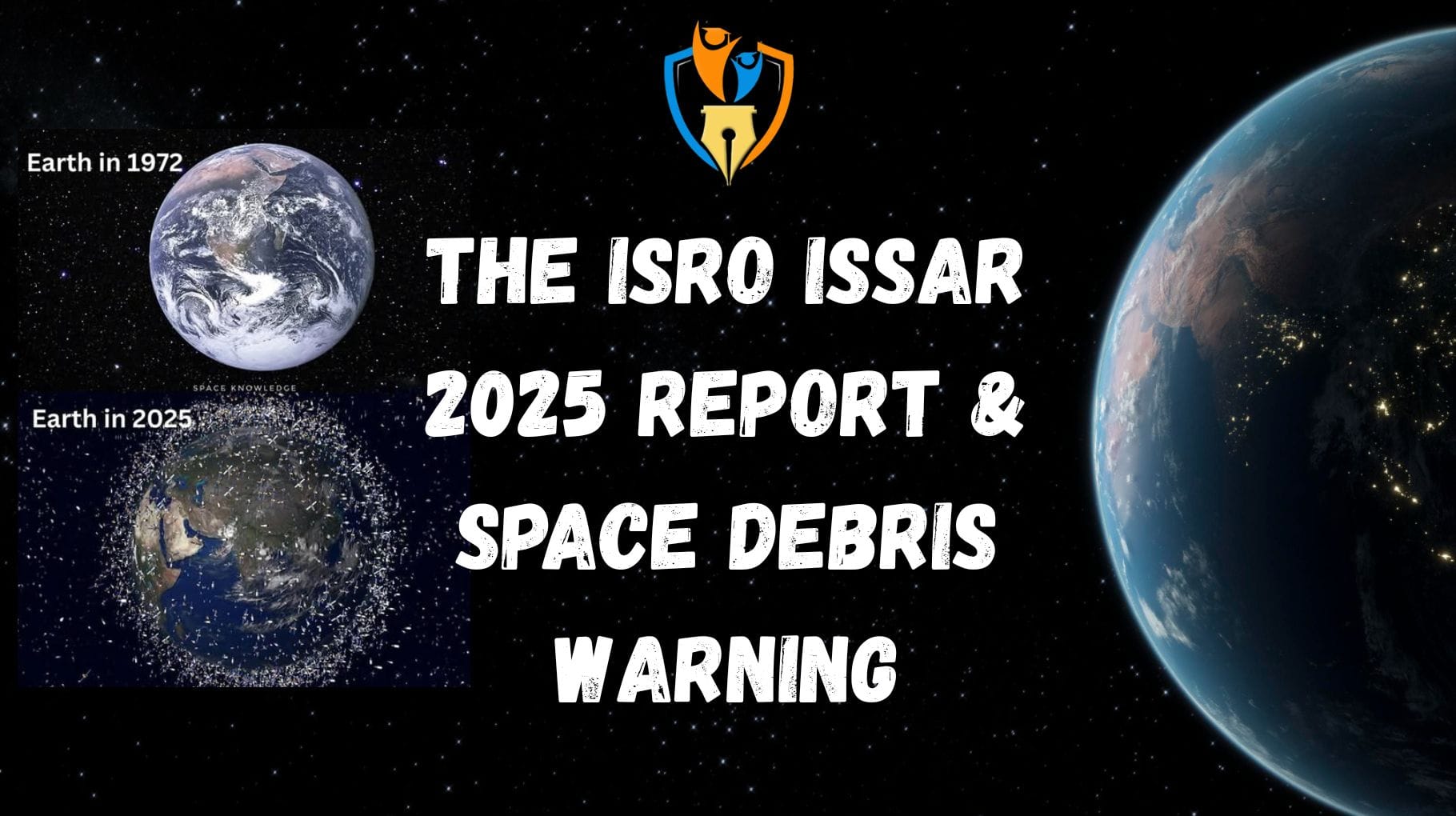
The year 2025 recorded the highest number of space launches since the dawn of the space age (1957). While this signifies a booming global space economy, it has led to an alarming density of objects in Low Earth Orbit (LEO), necessitating constant surveillance to protect expensive satellite assets.
Table of Contents
Key Highlights of ISSAR 2025
- Explosion in Launch Activity:
- 328 launch attempts were made globally in 2025 (315 successful).
- 4,198 operational satellites were added to orbit in a single year.
- Total space object population rose significantly, with 4,651 new objects cataloged.
- The “Close Approach” Crisis:
- Indian satellites received over 1.5 lakh close approach alerts from the US Space Command’s Combined Space Operations Center (CSpOC).
- Globally, there were 1.6 lakh alerts in LEO alone.
- Collision Avoidance Manoeuvres (CAMs): ISRO had to perform 18 CAMs (14 in LEO, 4 in GEO) to move satellites out of harm’s way.
- Even deep-space missions weren’t exempt: Chandrayaan-2 Orbiter had to adjust its plan twice due to proximity with NASA’s Lunar Reconnaissance Orbiter (LRO).
- Atmospheric Re-entries:
- 1,911 objects re-entered Earth’s atmosphere. This was slightly lower than 2024 (which saw massive de-orbiting of Starlink satellites).
- Solar activity (Solar Cycle 25 peak) accelerated orbital decay, helping “clean” some debris naturally.
- India’s Space Presence (End of 2025):
- Total Indian spacecraft launched: 144 (includes government, private, and academic).
- Active Government Satellites: 22 in LEO and 31 in GEO.
- Active Deep Space Missions: Chandrayaan-2 and Aditya-L1.
Analysis for Prelims (Facts & Terminology)
- ISSAR: Annual report released by IS4OM (ISRO System for Safe and Sustainable Space Operations Management).
- Kessler Syndrome: A theoretical scenario where the density of objects in LEO is high enough that collisions between objects could cause a cascade—each collision generating space debris that increases the likelihood of further collisions.
- NETRA (Network for Space Objects Tracking and Analysis): India’s indigenous early warning system to monitor debris.
- IADC (Inter-Agency Space Debris Coordination Committee): An international forum where ISRO plays a leading role in setting debris mitigation guidelines.
- NISAR: A joint NASA-ISRO mission. The report mentions a “Risk Mitigation Maneuver” (NASA terminology for CAM) performed for NISAR.
- DFSM 2030: ISRO’s goal for Debris-Free Space Missions by 2030, ensuring that all space actors (including private) leave no debris behind.
Analysis for Mains (Issues & Policy)
1. Space Sustainability & Governance
The report warns that active satellites may soon outnumber space debris due to mega-constellations (like Starlink, Kuiper). This shifts the burden from “debris management” to “space traffic coordination.”
- Main Point: International law (Outer Space Treaty) lacks teeth in enforcing “traffic rules,” making voluntary guidelines like those from the IADC crucial.
2. Economic Risks
Each Collision Avoidance Manoeuvre (CAM) consumes a satellite’s precious onboard fuel, directly reducing its operational lifespan and increasing the cost of services (internet, GPS, weather).
3. India’s Strategic Response
- Indigenous Capability: India is reducing reliance on US data by building the Multi-Object Tracking Radar (MOTR) at Sriharikota and refurbishing the Baker Nunn Schmidt Telescope (BNST) in Nainital.
- SpaDeX Mission: Recent success in autonomous docking/undocking is a step toward “In-orbit servicing” (repairing or refueling satellites rather than letting them become debris).
4. Private Sector Integration
With 2025 seeing the first private soft landing on the moon (Blue Ghost Mission 1), the report highlights that the private sector is now a major stakeholder in space safety.
| Sample Practice Question Prelims: Project NETRA, often seen in the news, is associated with: A) Deep Sea exploration B) Tracking of space debris C) Arctic research stations D) Cyber-security surveillance (Answer: B) Mains: “The increasing congestion in Low Earth Orbit (LEO) poses a significant threat to the long-term sustainability of outer space activities.” Discuss the measures taken by ISRO to ensure a ‘Debris-Free Space’ by 2030. |
விண்வெளி நெரிசல்: ISSAR 2025 அறிக்கை மற்றும் விண்வெளிக் கழிவுகள் எச்சரிக்கை
சூழல் (Context)
2025-ஆம் ஆண்டு விண்வெளி வரலாற்றிலேயே அதிகப்படியான ஏவுதல்கள் நடைபெற்ற ஆண்டாகப் பதிவாகியுள்ளது. இந்த அபரிமிதமான வளர்ச்சியால் புவியின் சுற்றுப்பாதையில், குறிப்பாக Low Earth Orbit (LEO) பகுதியில் “விண்வெளி நெரிசல்” (Space Congestion) அதிகரித்துள்ளது. இதனை விளக்கும் விதமாக இஸ்ரோ (ISRO) தனது 2025-ஆம் ஆண்டிற்கான விண்வெளி நிலை மதிப்பீட்டு அறிக்கையை (ISSAR) வெளியிட்டுள்ளது.
அறிக்கையின் முக்கிய அம்சங்கள் (Key Highlights)
- ஏவுதல்களின் எண்ணிக்கை:
- 2025-இல் உலகளவில் 328 ஏவுதல் முயற்சிகள் மேற்கொள்ளப்பட்டன (அதில் 315 வெற்றிகரமானவை).
- இதன் மூலம் 4,198 புதிய செயற்கைக்கோள்கள் விண்வெளிக்கு அனுப்பப்பட்டுள்ளன.
- தற்போது விண்வெளியில் உள்ள பொருட்களின் எண்ணிக்கை முந்தைய ஆண்டுகளை விட கணிசமாக உயர்ந்துள்ளது.
- நெருக்கமான அணுகல் எச்சரிக்கைகள் (Close Approach Alerts):
- இந்திய செயற்கைக்கோள்களுக்கு மட்டும் அமெரிக்க விண்வெளி ஆணையத்திடம் (CSpOC) இருந்து 1.5 லட்சம் மோதல் எச்சரிக்கைகள் வந்துள்ளன.
- விண்வெளியில் ஒட்டுமொத்தமாக சுமார் 1.6 லட்சம் எச்சரிக்கைகள் பதிவாகியுள்ளன.
- மோதல் தவிர்ப்பு சூழ்ச்சிகள் (Collision Avoidance Manoeuvres – CAM):
- மோதல்களைத் தவிர்க்க இஸ்ரோ தனது செயற்கைக்கோள்களை 18 முறை இடமாற்றம் (CAM) செய்துள்ளது.
- சந்திரயான்-2 (Chandrayaan-2) போன்ற ஆழமான விண்வெளி திட்டங்களும் இதிலிருந்து தப்பவில்லை; நாசாவின் எல்.ஆர்.ஓ (LRO) செயற்கைக்கோள் அருகே வந்ததால் சந்திரயான்-2 இருமுறை இடமாற்றம் செய்யப்பட்டது.
- வளிமண்டல மறுபிரவேசம் (Atmospheric Re-entries):
- சுமார் 1,911 பொருட்கள் மீண்டும் புவியின் வளிமண்டலத்திற்குள் நுழைந்துள்ளன. சூரியச் சுழற்சியின் (Solar Cycle 25) உச்சகட்ட செயல்பாடுகளால் விண்வெளிக் கழிவுகள் இயற்கையாகவே அழிவது அதிகரித்துள்ளது.
தேர்வு நோக்கில் முக்கியக் குறிப்புகள் (Prelims & Mains Points)
அறிவியல் மற்றும் தொழில்நுட்பம் (Prelims Focus):
- IS4OM: இது இஸ்ரோவின் விண்வெளி பாதுகாப்பு மற்றும் நிலைத்தன்மை மேலாண்மைக்கான ஒரு ஒருங்கிணைந்த அமைப்பாகும்.
- NETRA (Network for Space Objects Tracking and Analysis): விண்வெளிக் கழிவுகளைக் கண்காணிக்க இந்தியா உருவாக்கியுள்ள சொந்த எச்சரிக்கை அமைப்பு.
- கெஸ்லர் சிண்ட்ரோம் (Kessler Syndrome): விண்வெளியில் குப்பைகள் ஒன்றோடு ஒன்று மோதி, மேலும் பல குப்பைகளை உருவாக்கி, ஒரு தொடர் வினையை (Chain reaction) ஏற்படுத்தும் நிலை. இது எதிர்கால விண்வெளிப் பயணத்தையே சாத்தியமற்றதாக்கும்.
- DFSM 2030: 2030-ஆம் ஆண்டிற்குள் விண்வெளிக் கழிவில்லா நிலையை அடைவதே இஸ்ரோவின் இலக்காகும்.
சவால்கள் மற்றும் தீர்வுகள் (Mains Focus):
- பொருளாதார தாக்கம்: ஒவ்வொரு முறையும் செயற்கைக்கோளை இடமாற்றம் செய்யும்போதும் (CAM), அதன் எரிபொருள் செலவாகிறது. இது செயற்கைக்கோளின் ஆயுட்காலத்தை (Lifespan) குறைக்கிறது.
- சர்வதேச விண்வெளி விதிகள்: தற்போதுள்ள விண்வெளி சட்டங்கள் (Outer Space Treaty) நெரிசலைக் கட்டுப்படுத்த போதுமானதாக இல்லை. இதற்காக IADC போன்ற அமைப்புகளின் வழிகாட்டுதல்கள் அவசியமாகின்றன.
- தனியார் பங்களிப்பு: ஸ்டார்லிங்க் (Starlink) போன்ற தனியார் நிறுவனங்களின் ‘மெகா-கான்ஸ்டலேஷன்ஸ்’ (Mega-constellations) அதிகரிப்பு, விண்வெளி போக்குவரத்தை மேலாண்மை செய்வதில் பெரும் சவாலாக உள்ளது.