GoI has approved introduction of Mutual Credit Guarantee Scheme for MSMEs (MCGS- MSME) for providing 60% guarantee coverage by National Credit Guarantee Trustee Company Limited (NCGTC) to Member Lending Institutions (MLIs*) for credit facility upto Rs.100 crore sanctioned to eligible MSMEs under MCGS-MSME for purchase of equipment / machinery.
MSME Sector: Credit Guarantee Scheme & Budgetary Reforms (2025-26)
1. Mutual Credit Guarantee Scheme (MCGS-MSME)
A pivotal scheme designed to facilitate term loans for MSMEs to purchase machinery and equipment without collateral.
- Guarantee Coverage: 60% provided by the National Credit Guarantee Trustee Company Limited (NCGTC).
- Eligible Borrowers: MSMEs with valid Udyam Registration (Must not be an NPA).
- Loan Purpose: Must cover at least 75% of project cost for equipment/machinery.
- Timeline: Active for 4 years or until a ₹7 lakh crore guarantee limit is reached.
- Repayment Structure:
- Up to ₹50 Cr: 8-year tenure + 2-year moratorium on principal.
- Above ₹50 Cr: Flexible, longer schedules considered.
2. Key Highlights from Union Budget 2025-26
The government has significantly expanded the definition and financial support for the sector:
- Revised MSME Classification: Thresholds for investment increased by 2.5x and turnover limits by 2x.
- Enhanced Credit Limits:
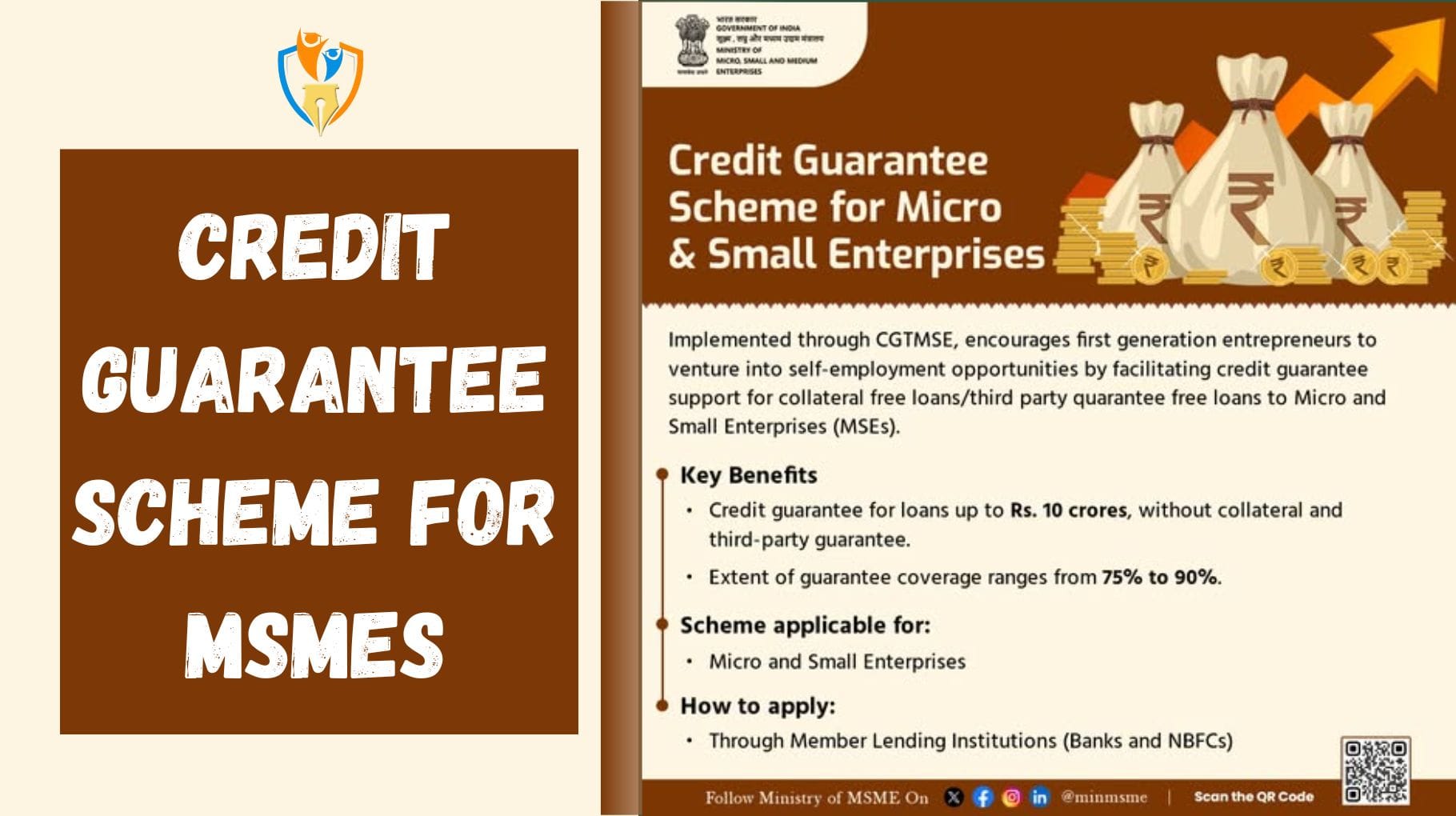
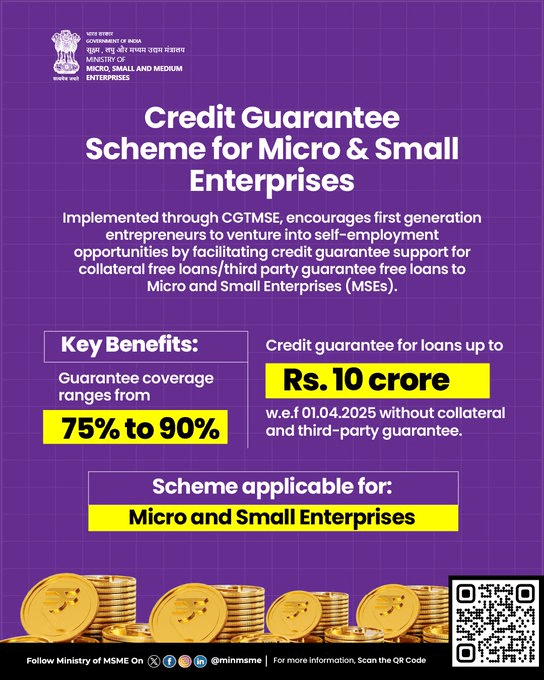
- Micro & Small: Limit raised from ₹5 Cr to ₹10 Cr.
- Startups: Limit raised from ₹10 Cr to ₹20 Cr (1% guarantee fee for 27 Atmanirbhar sectors).
- Exporters: Term loans up to ₹20 Cr for well-run MSME exporters.
- Financial Inclusion Initiatives:
- Customized Credit Card: ₹5 lakh credit for 10 lakh Micro Enterprises (Udyam registered).
- Equity Support: New ₹10,000 crore Fund of Funds for startups.
- Social Inclusion: Term loans up to ₹2 Cr for 5 lakh first-time women, SC, and ST entrepreneurs.
3. Significance of the MSME Sector (The “Engine of Growth”)
| Parameter | Contribution/Stat |
| GDP Contribution | ~30% of India’s GDP |
| Manufacturing | 36% of total manufacturing output |
| Exports | ~45% of total national exports |
| Employment | ~7.5 crore people across 1 crore registered units |
| Rural Impact | 50% of units are rural; provides 45% of rural employment |
Concept Note: MSMEs are vital for reducing Disguised Unemployment (surplus labor in agriculture) by absorbing the rural workforce into productive secondary and tertiary roles.
4. Challenges & Obstacles
- Credit Gap: Information asymmetry and lack of collateral lead to high rejection rates by formal banks.
- Infrastructure: Gaps in “last-mile” connectivity, power reliability, and digital access.
- Liquidity Crunch: Chronic delayed payments from large-scale buyers and PSUs.
- Compliance: Complex tax structures and evolving ESG (Environmental, Social, and Governance) reporting requirements for exporters.
- Tech Lag: Low adoption of Industry 4.0, affecting global competitiveness.
5. Government Ecosystem: Major Initiatives
- RAMP Scheme: World Bank-assisted program for market and technology access.
- PM VISHWAKARMA: End-to-end support for traditional artisans (18 trades).
- TEAM Initiative: Onboarding MSMEs to e-commerce platforms (logistics/cataloging).
- Public Procurement Policy: Mandates 25% procurement by Central Ministries from MSEs.
- Udyam Assist Platform: Formalizes “Informal Micro Enterprises” to access Priority Sector Lending (PSL).
6. Way Forward (Exam Perspective)
To transition from a $5 trillion economy to a developed nation, India must:
- Leverage Alternative Data: Use GST, digital footprints, and e-commerce data for credit assessment instead of traditional collateral.
- Global Value Chains (GVC): Incentivize MSMEs to meet international quality standards to integrate with global supply chains.
- Cluster Development: Promote MSME clusters to achieve economies of scale and collective bargaining power.
- Regulatory Ease: Simplify “Ease of Doing Business” by reducing the compliance burden and streamlining labor laws.