தொங்கு சட்டசபை (Hung Assembly): ஒரு விளக்கம்
தொங்கு சட்டசபை (Hung Assembly): ஒரு விளக்கம்
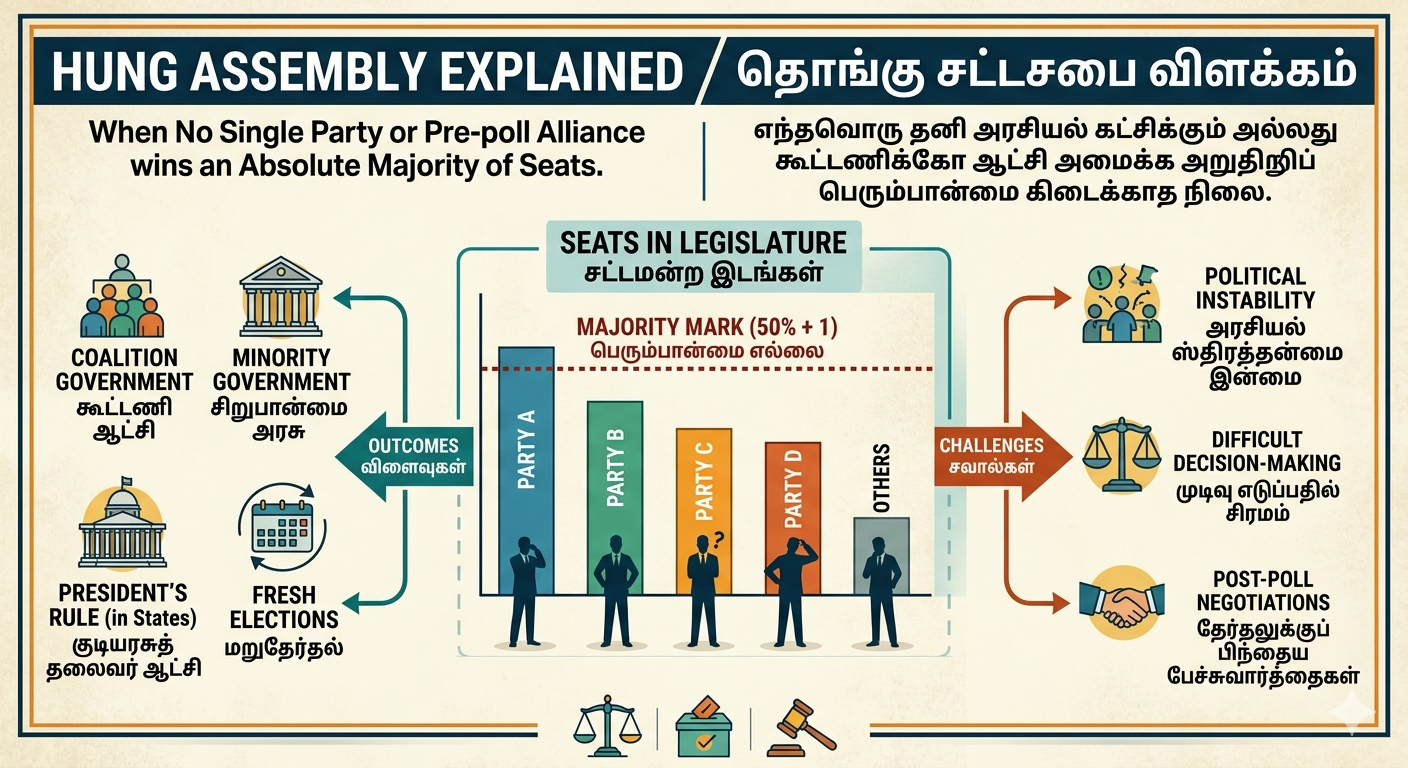
Hung Assembly (தொங்கு சட்டசபை) என்பது ஒரு ஜனநாயக நாட்டின் சட்டமன்ற அல்லது நாடாளுமன்றத் தேர்தலில், எந்தவொரு தனி அரசியல் கட்சிக்கும் அல்லது முன்பே அமைக்கப்பட்ட கூட்டணிக்கோ ஆட்சி அமைக்கத் தேவையான அறுதிப் பெரும்பான்மை (Absolute Majority) கிடைக்காத நிலையைக் குறிக்கிறது.
இது எப்போது நிகழ்கிறது?
ஒரு சட்டசபையில் மொத்தம் உள்ள இடங்களில் பாதிக்கும் மேலான இடங்களை (50% + 1) ஒரு கட்சி வென்றால் மட்டுமே அது தானாகவே ஆட்சி அமைக்க முடியும். எந்தக் கட்சிக்கும் இந்த எண்ணிக்கை கிடைக்காதபோது, அந்தச் சபை “தொங்கலில்” இருப்பதாகக் கருதப்படுகிறது.
தொங்கு சட்டசபை ஏற்பட்டால் என்ன நடக்கும்?
இத்தகைய சூழலில், ஆட்சி அமைக்கப் பின்வரும் வழிகள் பின்பற்றப்படுகின்றன:
- கூட்டணி ஆட்சி (Coalition Government): வெவ்வேறு கொள்கைகளைக் கொண்ட இரண்டு அல்லது அதற்கு மேற்பட்ட கட்சிகள் இணைந்து பெரும்பான்மையை நிரூபித்து ஆட்சி அமைப்பது.
- வெளிப்புற ஆதரவு (Outside Support): ஒரு பெரிய கட்சி ஆட்சி அமைக்கும், அதற்கு மற்ற சிறிய கட்சிகள் அமைச்சரவையில் சேராமல் வெளியில் இருந்து ஆதரவு அளிக்கும்.
- சிறுபான்மை அரசு (Minority Government): அதிக இடங்களைப் பிடித்த கட்சி, மற்ற கட்சிகளின் மறைமுக ஆதரவுடன் அல்லது வாக்கெடுப்பின் போது அவர்கள் விலகி இருப்பதன் மூலம் தற்காலிகமாக ஆட்சி நடத்துவது.
- மறுதேர்தல் (Re-election): எந்தக் கட்சியாலும் உடன்பாட்டிற்கு வர முடியாவிட்டால், ஆளுநர் அல்லது குடியரசுத் தலைவர் சபையைக் கலைத்துவிட்டு மீண்டும் தேர்தலை அறிவிப்பார்.
1. இந்திய வரலாறு மற்றும் பரிணாமம்
இந்தியாவில் “ஒரு கட்சி ஆதிக்கம்” குறைந்த பிறகு, 1989-களுக்குப் பின் இந்த ‘தொங்கு நாடாளுமன்ற’ முறை அதிகமானது.
- முதல் தொங்கு நாடாளுமன்றம் (1989): 9-வது மக்களவைத் தேர்தலில் எந்தக் கட்சிக்கும் பெரும்பான்மை கிடைக்கவில்லை. காங்கிரஸ் பெரிய கட்சியாக இருந்தாலும் ஆட்சி அமைக்க மறுத்தது. வி.பி. சிங் (ஜனதா தளம்) பாரதிய ஜனதா மற்றும் இடதுசாரி கட்சிகளின் “வெளியிலிருந்து ஆதரவு” (Outside Support) மூலம் முதல் சிறுபான்மை அரசை அமைத்தார்.
- கூட்டணி யுகம் (1989–1999): 9-வது முதல் 13-வது மக்களவை வரை பல தொங்கு நாடாளுமன்றங்கள் அமைந்தன. இதுவே ஐக்கிய முன்னணி (United Front) மற்றும் தேசிய ஜனநாயகக் கூட்டணி (NDA) போன்றவை உருவாகக் காரணமாக இருந்தது.
2. அரசியலமைப்புச் சட்டப் பிரிவுகள் (Important Articles)
தேர்வு நோக்கில் இந்தப் பிரிவுகள் மிக முக்கியமானவை:
- பிரிவு 163 (ஆளுநரின் விருப்ப அதிகாரம்): தொங்கு சட்டசபை அமையும் போது, யாரை ஆட்சி அமைக்க அழைப்பது என்பதில் ஆளுநருக்கு “தன்னிச்சையான விருப்ப அதிகாரம்” (Discretionary Power) உண்டு.
- பிரிவு 356 (குடியரசுத் தலைவர் ஆட்சி): எந்தக் கட்சியாலும் ஆட்சி அமைக்க முடியாத சூழல் ஏற்பட்டால், அரசியலமைப்பு இயந்திரம் சீர்குலைந்ததாகக் கருதி ஆளுநர் குடியரசுத் தலைவர் ஆட்சியைப் பரிந்துரைக்கலாம்.
- பிரிவு 174: ஆளுநர் சட்டசபையைக் கூட்டவும், கலைக்கவும் உள்ள அதிகாரம்.
3. எஸ்.ஆர். பொம்மை வழக்கு (S.R. Bommai Case, 1994)
இது இந்திய அரசியலமைப்பில் ஒரு மைல்கல் வழக்கு.
- நம்பிக்கை வாக்கெடுப்பு (Floor Test): ஒரு கட்சிக்கு பெரும்பான்மை இருக்கிறதா என்பதை ஆளுநர் மாளிகையில் முடிவு செய்யக்கூடாது; சட்டசபையில்தான் (On the floor of the house) வாக்கெடுப்பு மூலம் நிரூபிக்க வேண்டும் என்று உச்சநீதிமன்றம் தீர்ப்பளித்தது.
4. முக்கியக் குழுக்களின் பரிந்துரைகள்
| குழு | பரிந்துரை |
| சர்க்காரியா ஆணையம் (1983) | ஆளுநர் யாரை அழைக்க வேண்டும் என்ற வரிசையை வழங்கியது: 1. தேர்தலுக்கு முந்தைய கூட்டணி, 2. தனிப்பெரும் கட்சி, 3. தேர்தலுக்கு பிந்தைய கூட்டணி. |
| பூஞ்சி ஆணையம் (2007) | தேர்தலுக்கு முந்தைய கூட்டணியை ஒரே கட்சியாகக் கருதி ஆட்சி அமைக்க அழைக்க வேண்டும் என்று பரிந்துரைத்தது. |
5. தேர்வுக்கான கலைச்சொற்கள்
- நம்பிக்கை வாக்கெடுப்பு (Confidence Motion): அரசாங்கம் தனது பெரும்பான்மையை நிரூபிக்க கொண்டு வரும் தீர்மானம்.
- குதிரை பேரம் (Horse-Trading): எம்.எல்.ஏ-க்கள் அல்லது எம்.பி-க்கள் கட்சி மாறுவதை அல்லது விலை பேசப்படுவதைக் குறிக்கும் அரசியல் சொல்.
- பொது குறைந்தபட்சத் திட்டம் (Common Minimum Programme): வெவ்வேறு கொள்கை உடைய கட்சிகள் இணைந்து ஆட்சி அமைக்கும் போது ஒத்துப்போகக்கூடிய திட்டங்களின் பட்டியல்.
Understanding a “Hung Assembly”
In a parliamentary democracy, a Hung Assembly occurs when no single political party or pre-poll alliance secures an absolute majority of seats in the legislature after a general election.
How is it Defined?
To form a government, a party typically needs to win at least one seat more than half of the total number of seats ($Total \div 2 + 1$). If the highest-winning party falls short of this “magic number,” the result is a deadlock known as a Hung Assembly.
Key Outcomes and Solutions
When a legislature is hung, the constitutional head (like the Governor or President) explores various possibilities to ensure a stable government:
- Coalition Building: Parties with different ideologies may come together to reach the majority mark. This involves intense negotiations and a “Common Minimum Program.”
- Confidence and Supply: A smaller party may agree to vote in favor of the government on key motions (like budgets) without officially joining the government.
- The Largest Party Invitation: Often, the leader of the single largest party is invited first to prove their majority on the floor of the house within a specific timeframe.
- President’s Rule / Fresh Elections: In India, if no stable government can be formed in a state, “President’s Rule” may be imposed. If the deadlock continues, the assembly is dissolved, and the public must vote again.
Challenges
Hung assemblies often lead to political instability. Since the government relies on multiple partners, decision-making can be slow, and the constant threat of a partner withdrawing support keeps the government in a fragile state.
1. Historical Evolution in India
The phenomenon of hung assemblies (and parliaments) became prominent after the decline of the “One-Party Dominant System” (Congress era) in the late 1960s and 1980s.
- First Hung Parliament (1989): The 9th Lok Sabha elections in 1989 were a turning point. No party won a majority. The Congress, despite being the largest party (193 seats), refused to form the government. V.P. Singh (Janata Dal) formed the first minority government with “outside support” from the BJP and Left parties.
- The Decade of Coalitions (1989–1999): This period saw a series of hung parliaments ($9^{th}$ to $13^{th}$ Lok Sabha), leading to the rise of coalition politics and the era of United Front, National Front, and NDA governments.
- State-Level Examples: States like Karnataka, Goa, and Maharashtra have frequently witnessed hung assemblies, leading to intense post-poll negotiations and occasionally “resort politics.”
2. Constitutional Provisions & Articles
In exams, you must link the concept to specific articles:
- Article 356 (President’s Rule): If a hung assembly occurs and no coalition can be formed, the Governor may recommend President’s Rule on the grounds of “failure of constitutional machinery.”
- Article 163: Discusses the Discretionary Powers of the Governor. In a hung assembly, the Governor’s discretion in inviting a leader to form the government is critical.
- Article 174: Relates to the Governor’s power to summon, prorogue, or dissolve the state assembly.
3. The Landmark S.R. Bommai Case (1994)
This is the most important legal reference for any exam. Before this judgment, Governors often arbitrarily dismissed state governments or recommended President’s Rule during hung assemblies.
Key Guidelines from the Judgment:
- Floor Test is Mandatory: The majority must be proved on the floor of the House, not in the Governor’s chambers.
- Judicial Review: The President’s Proclamation under Article 356 is subject to judicial review.
- Opportunity to Form Government: The Governor must explore all possibilities of forming a stable government (inviting the largest party or a coalition) before recommending the dissolution of the house.
4. Commissions and Recommendations
| Commission | Recommendation |
| Sarkaria Commission (1983) | Suggested a clear order of preference for the Governor: 1. Pre-poll alliance, 2. Single largest party with support, 3. Post-poll alliance. |
| Punchhi Commission (2007) | Recommended that in case of a hung assembly, a pre-poll alliance should be treated as a single political party. |
5. Exam-Point Terminology
- Lame Duck Session: The last session of an existing assembly after a new one has been elected (relevant if the old government stays briefly).
- Floor Test (Composite): A special test where multiple claimants for the Chief Minister post are voted upon simultaneously to see who has the most support.
- Common Minimum Programme (CMP): A document drafted by coalition partners in a hung assembly to agree on shared policies.